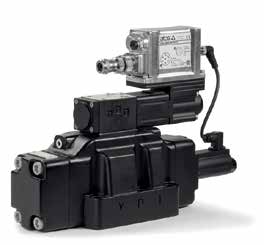
| Regulate hydraulic flow or actuator speed | Proportional directional and flow valves. Combine electrical commands with hydraulic regulation. Where feedback is required, assess servoproportional configurations with an LVDT transducer and digital driver. | Operating pressure, required flow, load variation, command signals and feedback requirements. |
|---|
| Regulate or limit circuit pressure | Proportional relief and reducing valves. Address pressure regulation requirements, with pressure-transducer configurations available for assessment. | Pressure range, flow, relief or reducing function, response requirements and sensor configuration. |
|---|
| Coordinate position, speed and force | Axis control and p/Q control. Axis control addresses position, speed and force; p/Q control combines flow regulation with pressure or force control. | Control objectives, actuator and sensors, stroke and speed, load, and interfaces to the existing control system. |
|---|
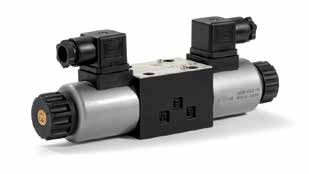
| Switch direction or configure circuit functions | On-off directional, cartridge and conventional hydraulic valves. Configure direction, pressure, flow or check functions using the appropriate mounting arrangement. | Hydraulic circuit diagram, valve function, pressure and flow, size, mounting interface, actuation method and electrical connections. |
|---|
| Specify hydraulic power and actuation | Pumps, cylinders and hydraulic system configurations. Review power supply, actuator motion and the control circuit together when identifying components. | Equipment application, load and duty cycle, cylinder stroke, fluid and temperature, available space and scope of supply. |
|---|